Key takeaways
- London is in Canadian Hardiness Zone 5b (USDA 6a), with winter lows of –25 °C to –20 °C, a last spring frost around May 15, and about 141 frost-free days (Government of Canada Plant Hardiness Zones, Almanac.com).
- Most London properties sit on heavy alkaline clay that retains moisture and drains slowly, which changes how patios, walls, and planting beds should be built.
- The core landscaping seasons in London run April through late November for hardscape and mid-May through early September for planting.
- Interlock, natural stone, treated hardwood, and composite are the four materials that consistently perform in London’s freeze-thaw cycle.
- A properly designed London landscape treats design, hardscape, carpentry, and planting as one integrated project rather than four separate trades.
Landscaping in London, Ontario is not the same as landscaping in Toronto, Windsor, or the GTA. The city’s Zone 5b winters, heavy clay soils, and roughly 141-day growing season decide what materials last, when construction can happen, and which plants survive their first winter. This guide covers everything a London homeowner should understand before spending money on a landscape project in 2026, from base preparation and material selection to seasonal timing and neighbourhood-specific considerations.
This article is for London homeowners planning a landscape, hardscape, or planting project in 2026, whether that means a full backyard rebuild, a new interlock driveway, or a first proper garden bed. It is also useful for property owners in St. Thomas, Ilderton, Komoka, Ingersoll, Tillsonburg, Port Stanley, and Port Bruce, since Southwestern Ontario shares London’s climate and soil characteristics.
Table of contents
- London’s climate, soil, and hardiness zone
- The main types of landscaping work in London
- What Zone 5b means for your plant list
- Materials that last in London’s freeze-thaw cycle
- Seasonal timing for a London landscape project
- Neighbourhood-specific considerations
- Typical London landscaping costs in 2026
- How a full-service studio delivers a London project
- FAQ
London’s climate, soil, and hardiness zone
Everything in London landscaping starts with three facts about the site.
| Factor | London, Ontario |
|---|---|
| Canadian Hardiness Zone | 5b |
| USDA Hardiness Zone | 6a |
| Typical winter low | –25 °C to –20 °C |
| Last spring frost (average) | May 15 |
| First fall frost (average) | Oct 4 |
| Growing season | ~141 days |
| Predominant soil | Heavy alkaline clay |
| Notable behaviour | Retains moisture, drains slowly, compacts easily, dries into a hard crust in summer |
Every design decision below traces back to that table. Freeze-thaw movement dictates hardscape base depth. Alkaline clay dictates plant selection and drainage strategy. A 141-day growing season dictates when you can plant and when it is too late to install turf.
The main types of landscaping work in London
Most residential landscaping in London falls into five categories. A serious project usually combines two or three of them.
- Landscape design. Master plans, planting design, and 3D renderings that show the finished space before construction starts. This is the phase most homeowners skip and later wish they had not. See Bond’s landscape design service for the workflow.
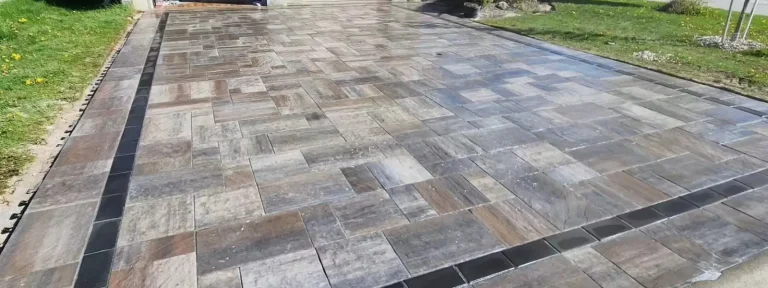
- Hardscape. Interlock, natural stone, and concrete used for patios, walkways, driveways, and pool decks. Explore Bond’s interlock page and patios and walkways page for London-appropriate builds.
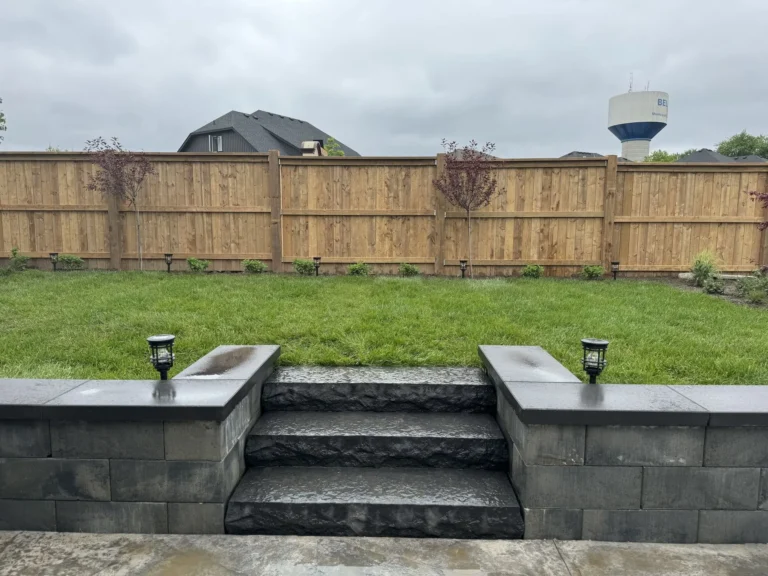
- Retaining walls. Engineered walls that turn sloped or terraced London lots into usable outdoor rooms. Walls over one metre are also a permit item in the City of London. Review Bond’s retaining walls page for common approaches.
- Carpentry. Decks, fences, pergolas, arbours, and privacy screens. Cedar, treated pine, and composite are the three materials that work best in a Zone 5b climate. See Bond’s decks and fences page and carpentry page.
- Custom woodwork. Outdoor kitchens, built-in benches, planters, and other bespoke pieces integrated into the landscape. See Bond’s custom woodwork page.
If you are hiring for the project and want to vet the crews you are talking to, our companion guide How to Choose London Landscapers walks through credentials, quotes, and contract structure.
What Zone 5b means for your plant list
Zone 5b tells you the coldest average winter temperature a plant needs to survive on your property. In London, that is –25 °C to –20 °C. Any plant tag rated Zone 5, 4, or 3 will overwinter reliably. Zone 6 plants are marginal and often need siting near a warm south wall. Zone 7 and warmer plants will die in a normal London winter unless they are treated as annuals.
Reliable performers in London’s Zone 5b clay include:
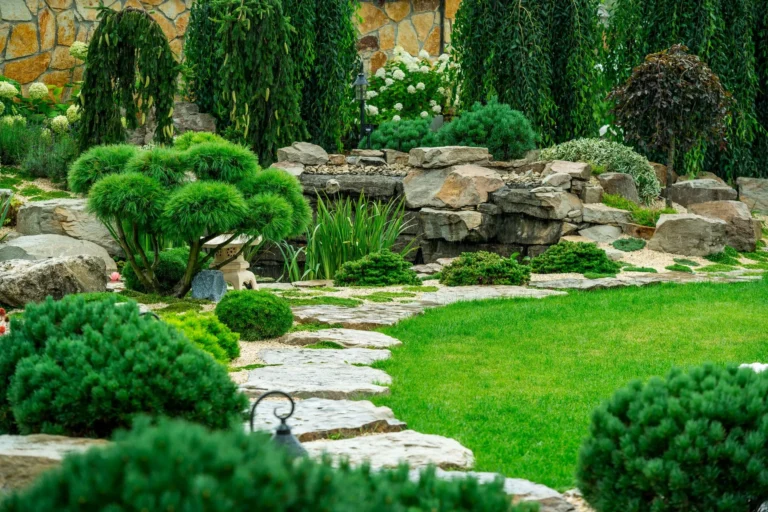
- Trees: Autumn Blaze maple, Serbian spruce, Amur maackia, ivory silk lilac, hackberry
- Shrubs: Limelight hydrangea, dwarf Korean lilac, ninebark, red-twig dogwood, boxwood (Green Velvet)
- Perennials: Karl Foerster feather reed grass, Russian sage, catmint, coneflower, black-eyed Susan, daylily, hosta
- Evergreens: Emerald cedar, mugo pine, dwarf Alberta spruce
Because London’s clay is alkaline, avoid acid-loving plants such as most rhododendrons, blueberries, and pieris unless you commit to amending soil pH annually.
Materials that last in London’s freeze-thaw cycle
London has roughly 60 to 90 freeze-thaw events every winter. Each cycle expands water inside your hardscape base by about 9%. Materials and installation methods have to be chosen with that in mind.
Interlock and pavers
The right base is the whole game. For pedestrian surfaces, that means a minimum 6-inch compacted 3/4-inch clear stone base on a geotextile fabric over clay subgrade, with polymeric sand joints. Driveways move up to 10 to 12 inches of base. Anything less is a callback in year two or three. Bond’s interlock page describes premium paver installations engineered to remain level for generations.
Natural stone
Flagstone, granite, and limestone all perform in London when set on the same clear-stone base as pavers. Dry-laid stone patios are more forgiving of frost heave than mortared stone. If you want a formal, mortared look, expect to include control joints and drainage detailing.
Concrete
Broom-finished and stamped concrete both work in London if the mix, thickness, and rebar are correct. Aim for a 3,000 to 4,000 psi mix, a minimum 4-inch slab for walkways and 5-inch for driveways, and control joints every 8 to 10 feet.
Wood, treated pine, and composite
- Western red cedar is the premium choice for London fences and decks. Expect 15 to 20 years with basic maintenance.
- Pressure-treated pine is the workhorse. Expect 15 to 25 years for structure, 10 to 12 for deck boards.
- Composite decking (capped polymer) handles London’s freeze-thaw well and typically carries a 25-year residential warranty.
Driveway materials
Interlock, asphalt, and concrete are the three real options. Asphalt is the cheapest install but needs seal-coating every 3 to 5 years. Interlock costs more up front but individual pavers can be lifted and reset if a section settles, which no other driveway material offers. Bond’s driveways page covers the trade-offs.
Seasonal timing for a London landscape project
Timing is where most London landscape projects go sideways. Use this calendar to plan backwards from your desired completion date.
| Month | What you should be doing |
|---|---|
| December – February | Design, permits, contracts, contractor selection |
| March | Site prep once ground is workable, ordering long-lead materials |
| April – May | Hardscape excavation and base work, deck framing, retaining walls |
| Mid-May – June | Planting (after May 15 last frost), sod installation |
| July – August | Ongoing hardscape, carpentry, water features, lighting |
| September | Fall planting window, mulch top-ups, sod |
| October | Final hardscape push before frost, fence installs |
| Early November | Deck stain, cleanup, dormant-season pruning |
| Mid-November – late November | Weather-dependent finish work |
Booking design in January means construction starts in April, which means you use the space by Canada Day. Waiting until April to book design usually pushes the same project to August or September.
Neighbourhood-specific considerations in London
London’s neighbourhoods have real differences that affect a landscape design.
- Old North. Mature tree canopy, heritage character, and clay-loam soil. Designs should protect existing root zones and lean into shade-tolerant planting.
- Byron. Sloped lots along the Thames often need engineered retaining walls and drainage design. Setback and heritage-tree rules apply on some streets.
- Masonville. Larger lots and newer builds allow for full-property master plans and integrated outdoor kitchens. Bright sun on many south-facing yards suits Karl Foerster grass, catmint, and Russian sage.
- Hyde Park. New subdivisions with graded clay lots and tight setbacks. Priority projects are usually drainage correction, sod-to-garden conversions, and fence upgrades.
Bond’s London, ON service area page covers coverage across these neighbourhoods plus nearby communities in Southwestern Ontario.
Typical London landscaping costs in 2026
These are working ranges for London properties in 2026. Every project varies with site access, material spec, and scope.
| Project | Typical London price range (2026) |
|---|---|
| Interlock patio (400 sq ft) | $14,000 – $24,000 |
| Interlock driveway (600 sq ft) | $22,000 – $38,000 |
| Segmental retaining wall (30 ft, 3 ft tall) | $9,000 – $16,000 |
| Cedar privacy fence (80 ft, 6 ft tall) | $8,000 – $14,000 |
| Pressure-treated deck (300 sq ft) | $14,000 – $22,000 |
| Composite deck (300 sq ft) | $22,000 – $32,000 |
| Landscape design package (residential) | $2,500 – $8,000 |
| Full backyard renovation | $45,000 – $150,000+ |
Prices above are drawn from typical Southwestern Ontario contractor ranges. Bond and other reputable London studios can provide firm quotes after a site visit and design brief.
How a full-service studio delivers a London project
A traditional landscape project involves three or four separate trades, each with their own quote, timeline, and warranty. A full-service studio replaces that with one contract and one project manager.
The typical Bond workflow, for example, moves through five phases:
- Discovery call and site visit to understand goals, budget, and existing conditions.
- Design phase producing a scaled site plan, materials schedule, and 3D rendering.
- Proposal with itemized pricing tied to the approved design.
- Construction through the crew’s hardscape, carpentry, and planting teams under one project manager.
- Walkthrough and warranty, with workmanship and plant guarantees documented.
This is the model described on Bond’s about page and projects page, and it is the structure that removes handoff friction between design, hardscape, and carpentry on a London property.
Frequently asked questions
When can landscaping start in London, Ontario?
Hardscape work can typically start in early to mid-April once the ground thaws and stops holding standing water, and it can run through late November in most seasons. Planting is safest after the May 15 last-frost date and before roughly mid-September for shrubs and perennials.
What plant hardiness zone is London, Ontario in?
London, Ontario is in Canadian Hardiness Zone 5b, which is equivalent to USDA Zone 6a. That means average winter lows of –25 °C to –20 °C, so any plant rated Zone 5 or colder will overwinter reliably.
How much does landscaping cost in London, Ontario?
Common 2026 ranges are $14,000 to $24,000 for a 400 sq ft interlock patio, $8,000 to $14,000 for a mid-size cedar fence, and $45,000 or more for a full backyard renovation. Design packages typically run $2,500 to $8,000 for a residential property.
What is the best material for a driveway in London, Ontario?
Interlock, concrete, and asphalt all work in London. Interlock costs more up front but individual pavers can be lifted and reset if a section settles, which no other driveway material offers, so it wins on lifetime cost for most properties.
How do I deal with heavy clay soil for landscaping in London?
Amend planting beds with two to four inches of compost or aged bark fines worked into the top six inches, install a proper 6-inch compacted clear-stone base under any hardscape, and design a 1% to 2% slope away from structures. Choose clay-tolerant, Zone 5b-hardy plants.
Do I need a permit to landscape my London backyard?
Most planting and patio work does not need a permit, but decks over 24 inches, retaining walls over one metre, pool enclosures, and any work inside a regulated conservation area do. Confirm with the City of London building services before starting.
Next steps
Landscaping in London, Ontario rewards planning far more than any other single factor. Start with a design, choose materials rated for freeze-thaw, plant to Zone 5b, and hire a crew that can produce credentials on request. If you are still comparing bids, read our companion post How to Choose London Landscapers. When you are ready to talk about your own project, visit the Bond Landscape & Design contact page, review the gallery, or browse recent London projects.