Most backyards go quiet the moment the temperature drops. The patio furniture gets covered, the string lights come down, and the space that felt so alive in July sits empty until spring. It doesn’t have to work that way. With the right setup, a London, Ontario backyard can stay one of the best rooms in the house straight through January.
Winter outdoor living isn’t about toughing it out in the cold. It’s about designing the space so cold weather is part of the plan, not an obstacle to it. Here’s what actually makes a yard usable, and enjoyable, once the snow starts.
Start With Heat
Nothing extends a season like a real heat source, and you’ve got a few solid options depending on budget and how permanent you want it to be.
- Wood-burning or gas fire pits are the centerpiece most people picture first, and for good reason. A fire pit turns a patio into a destination rather than a pass-through space, and it works whether you’re out there for twenty minutes or the whole evening.
- Outdoor fireplaces built into a stone or masonry feature add more radiant heat and double as a visual anchor for the whole backyard, even when it’s not lit.
- Patio heaters, either freestanding or mounted, are the lowest-commitment option if you’re not ready for a permanent fire feature, and they pair well under a covered structure.
Whatever you choose, position it where wind won’t cancel it out. A heat source with no wind protection loses most of its value the moment a breeze picks up.
Build in Wind and Snow Protection
Heat only works if the space actually holds it. A pergola with a solid or retractable roof panel, a windbreak wall, or even well-placed evergreen shrubs can cut wind enough to make a huge difference in how usable the space feels in December.
Custom carpentry structures, covered pergolas, privacy screens, cedar-lined enclosures, do double duty here: they block wind in winter and provide shade in summer, so you’re not building something that only earns its keep for three months a year.
Keep the Hardscape Usable in the Cold
A patio that turns into an ice rink after the first freeze isn’t a winter space, it’s a liability. This is where material choice matters as much as design.
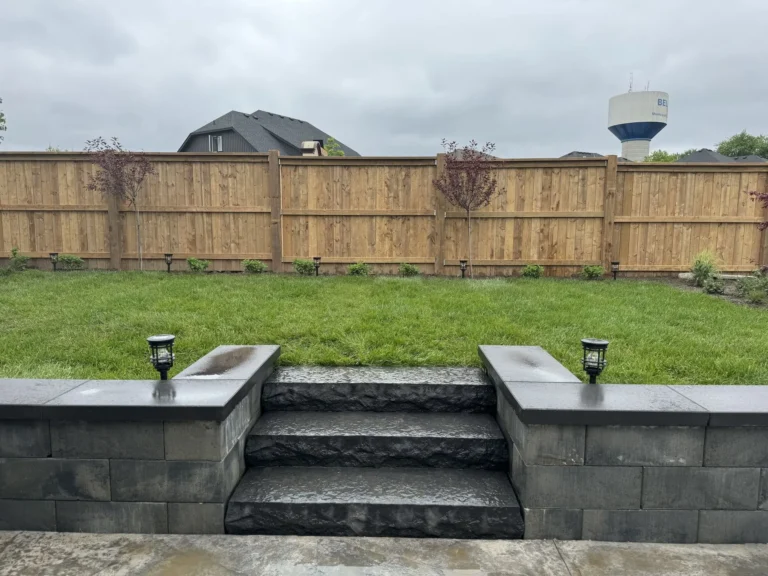
- Textured interlock or natural stone with a slip-resistant finish holds up far better underfoot than smooth poured concrete once frost sets in.
- Proper grading and drainage keep meltwater from pooling and refreezing into ice patches, something that’s easy to overlook until the first cold snap exposes it.
- Walkways connecting the house to the fire pit or seating area should be wide enough and even enough to use confidently in boots, not just sandals.
If your current patio or walkway wasn’t built with winter in mind, it’s worth having it looked at before committing to a full outdoor-living overhaul around it.
Layer in Lighting
Winter days are short, and a backyard that goes dark at 5 p.m. doesn’t get used. Layered lighting changes that:
- String lights across a pergola or fence line add ambient light without feeling like a floodlit parking lot.
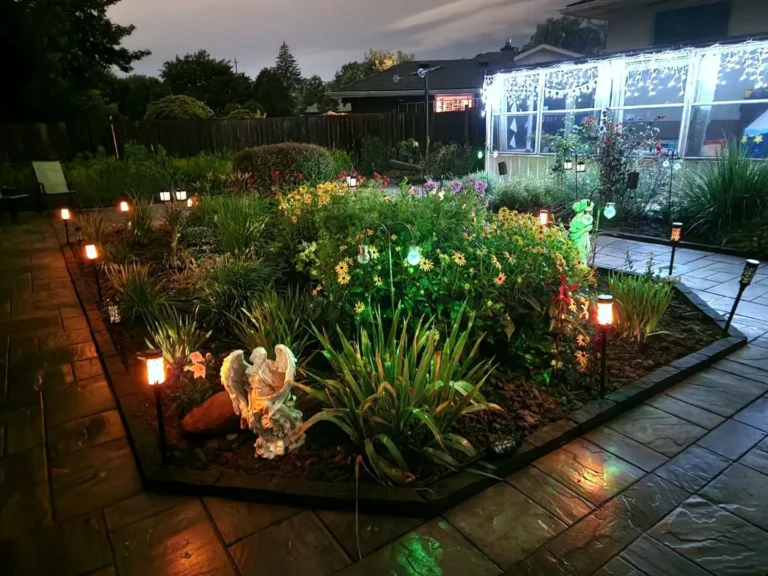
- Low path lighting along walkways makes the space feel safe to use after dark, especially once snow changes how everything looks and sounds.
- Uplighting on evergreens or structural features keeps the yard visually interesting even on nights you’re not using it, which matters more in winter when the space is otherwise easy to forget about.
Furnish for the Season, Not Against It
Summer furniture that gets covered and forgotten all winter is a missed opportunity. A few additions make a space genuinely winter-ready:
- Weatherproof cushions and throws in a durable outdoor fabric that can handle damp cold without holding moisture.
- A mix of seating heights around the fire pit, benches, Adirondack chairs, built-in stone or wood seating walls, so the space works for two people or twelve.
- A small side table or built-in surface near the seating area for drinks, which gets used a lot more than people expect once the space is actually comfortable.
Don’t Forget What’s Already Growing
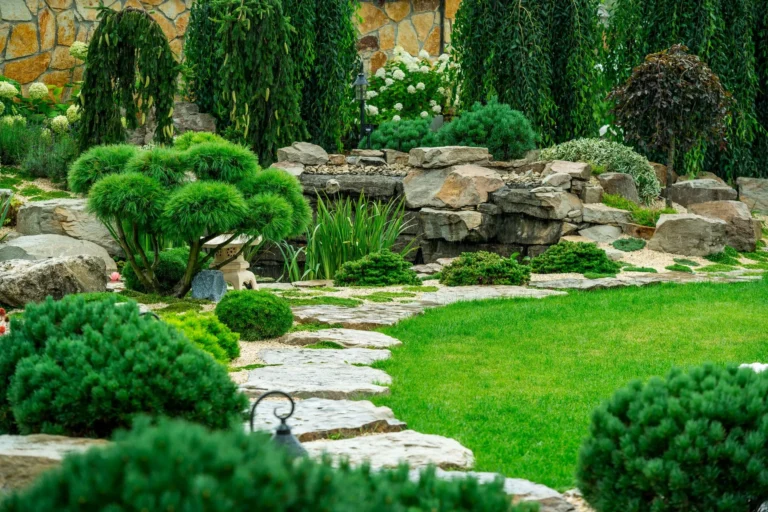
Evergreens, ornamental grasses left standing, and shrubs with winter berries or colorful bark do more than fill a bed, they give a winter yard structure and color when everything else has gone dormant. A backyard designed only around summer bloom time looks bare exactly when you’re trying to enjoy it most. Pairing hardscape upgrades with plants chosen for cold-weather interest is what makes the whole space feel finished instead of half-built.
Bringing It Together
The backyards that actually get used in winter aren’t lucky, they’re planned that way from the start: heat with wind protection around it, hardscape that stays safe underfoot, lighting that accounts for early darkness, and furniture that doesn’t need to be packed away every October. Our patio and walkway and custom carpentry teams build these features specifically for how London properties are actually used, not just how they photograph in July.
If you’re planning a broader outdoor living upgrade, our guides on custom carpentry trends and functional patio and walkway design are a good next read.
Frequently Asked Questions
What’s the best way to heat an outdoor space in a Canadian winter?
A wood-burning or gas fire pit paired with wind protection, like a pergola panel, windbreak wall, or evergreen screening, gives the most usable heat for the effort. Patio heaters work well as a lower-commitment option under a covered structure.
Can a regular patio be used safely in winter?
Only if it’s built for it. Textured interlock or natural stone with a slip-resistant finish, proper grading, and good drainage prevent the ice patches that make smooth concrete patios unsafe once temperatures drop.
Do I need to take outdoor furniture down every winter?
Not if it’s chosen for the season. Weatherproof cushions, durable outdoor fabrics, and built-in stone or wood seating hold up through a London winter far better than typical patio furniture, and mean the space stays ready to use whenever you want it.
What plants add winter interest to a backyard built for outdoor living?
Evergreens, ornamental grasses left standing through winter, and shrubs with colorful bark or berries keep a yard from looking bare once summer blooms are gone, giving the space visual structure even in the coldest months.